
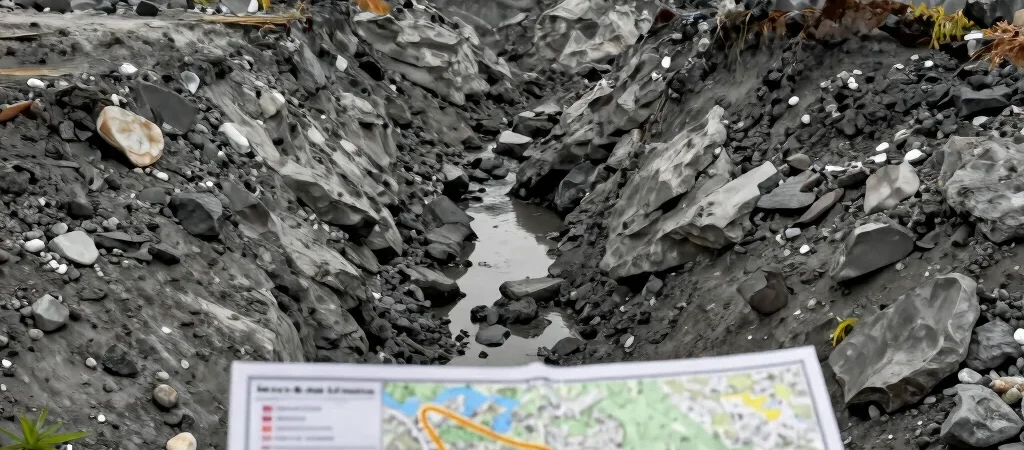
At a mine site, environmental protection is not an abstract industry target. It can begin with practical questions: where does rainwater flow, what nearby water sources do people rely on, and which areas have already been disturbed? The answers depend on the site and the surrounding landscape.
Start with the landscape
Artisanal and small-scale mining (ASM) includes different practices, geology, working arrangements, and local contexts. A remote site with seasonal streams raises different questions from a site near farms, settlements, or sensitive habitats. Treating all ASM as environmentally identical makes it harder to identify relevant risks.
A useful first step is to map the features people depend on or want to protect: drainage paths, water access, vegetation, and areas affected by extraction. Site observations can be considered alongside local knowledge and appropriate environmental expertise. The aim is to understand conditions before proposing measures.
Connect risks to practices
Environmental risks arise through specific interactions between work and place. Excavation can change the shape of land; runoff can carry sediment; and the handling of materials may require careful controls. Which concerns apply, and how significant they are, should be assessed locally rather than assumed from the word “mining” alone.
That distinction matters when discussing improvements. A broad recommendation is unlikely to help if it overlooks seasonal conditions, available resources, or how work is organized. Environmental guidance is more useful when people at the site can understand the reason for it and assess whether it fits their circumstances.
Plan beyond extraction
Planning for environmental protection also means looking beyond active extraction. Questions about stabilizing disturbed ground, managing water, and monitoring change can be considered as part of site planning, with qualified advice where needed. The right approach depends on local requirements, conditions, and the scale of the operation.
For educators, researchers, and industry partners, the most useful starting point is a grounded one: identify the place, listen to the people who know it, and be precise about what has been observed. That produces a stronger basis for discussion than a generic promise of sustainability.